
Two years ago, as we discussed designing a new GWI fellowship, we wanted to be responsive to what we were hearing. What were people in our network seeking in a cohort program? We had ideas, influenced by the process of facilitating the cohort that resulted in Kingston Common Futures, and our experience of running six cohorts of the GWI fellowship before that. But given the turbulence that we were all navigating – economic, social, personal – we felt trepidation at making assumptions about what was appropriate now. What do people actually and deeply need? What would be valuable enough that they would commit to a multi-month journey with us? What could we offer, what would be special, what kind of container made sense? How could we honor and strengthen all that they were already capable of as experienced change-agents and leaders in their communities?
We knew we wanted to build solidarity. We knew that “leadership development” was the game we wanted to play, but the usual rules of that game felt stale and irrelevant. We talked to past GWI fellows, we asked members of our network for advice, we researched other programs, and we listened. We were committed to the idea that old forms of leadership were part of the problem, part of why the economy was crushing vitality and creating chaos, instead of providing a tensile web of healthy collaboration to meet our human needs and care for the planet at the same time. We saw our mission as advancing a solidarity economy. So, our guiding question became: What does it take to be a solidarity leader? We looked at each other, and we went for it.
Thinking back on those early sketches of what became the Solidarity Leaders Lab, I am touched by how much we cared about and looked forward to our future cohort. With a sense of trust in our teammates and all the varied skills we could bring to this program, we made choices, some of them unconventional. As we do with a lot of our programming, we set ourselves up as guides, facilitators, and co-learners, not as “teachers”. We designed a multi-strand approach that wove together activities that focused on relationship-building, tactical skills practice, systems change theory, and quiet, transformative personal reflection. We committed to an in-person experience and to recruiting a cohort that was diverse across geography, identity, work focus, leadership level, age. What we were hoping to gather was a group of heart-led people who would want to sail this ship with us, and to keep sailing after the program was over, building mutual support and consistent presence with each other over time. We wanted to model the creation of solidarity within this microcosm.
It is hard for me to convey the radical results of this experiment and the gratitude I hold for being a part of it. I want to lean on the words of the Solidarity Leaders Lab fellows themselves, which I reread to reflect on this moment; their gorgeous testimonials can be found all along the length of the Lab’s program page here. They speak of the unexpected gifts they gave and received: laughter, play, connection, ritual, love. These aren’t your typical descriptors of a training program in leadership. They mention a sense of widening possibility, they talk about entering the program feeling depleted, confused or even down-trodden, and emerging from it feeling energized and clearer in their purpose, belonging to a vital tribe that they can now depend upon. They also point to the tangible ways that learning about decision-making, sharing power, cooperatives, or facilitation helped them gain the confidence to try new approaches to leadership in their own contexts.
The experience of spending meaningful time with these amazing human beings during the fellowship was one of great personal joy for me. The vulnerable, probing conversations resonate still. The intensely funny moments still can make me laugh out loud. The magic of ritual spaces entered into together, and the turning in tandem with the rhythms of the natural world, all this settled in my bones. When I see any of the Solidarity Leaders Lab fellows now, it is coming into the warm presence of a trusted friend.
We launched this adventure with 21 people in early April, meeting in-person every other week. We left our daily lives for a three-day retreat together in May, to drop into some of the ideas we had been working with in a more concentrated way and to refresh our spirits in a place of beauty. We celebrated the end of the program with a shared feast in June at the GWI Greenhouse. Since then, the group has coalesced into a self-organized crew, creating ways to connect regularly and supporting one another throughout the weeks that flowed into summer and then into the fall. We held a reunion potluck in mid-September, agreeing that we missed this, we missed each other! Because, of course, life is busy, and we all live in different parts of the region. Giddy with delight, we hugged and caught up, exchanging stories, laughing, and the food that everyone brought was fantastic.
It was such a rare privilege to witness the growth and change that we all experienced in that brief but intense time we had together – to listen and speak, to dance and weep, to ponder life’s most profound dilemmas and to practice life’s most valuable skills in service of being a wise and compassionate leader, partner, parent, friend, community member, self.
Solidarity requires us to show up for each other, to believe that it is possible to reject the tired and discredited story of our lonely, selfish quest for survival, and instead step forward into the daily inhabiting of a reality that looks like hard and good work, friendship, caring, thoughtfulness, collaboration, resilience, courage, creativity, playfulness, and hope. It is not only possible but we experienced it. It is here now. That is what I took away from this inaugural Solidarity Leaders Lab.
The Solidarity Leaders Lab fellowship program was designed and facilitated by GWI’s Deep Democracy Circle, stewarded by Micah and Hélène, and supported by Aja and our newest colleague Mitzy, with extra support from Mass.
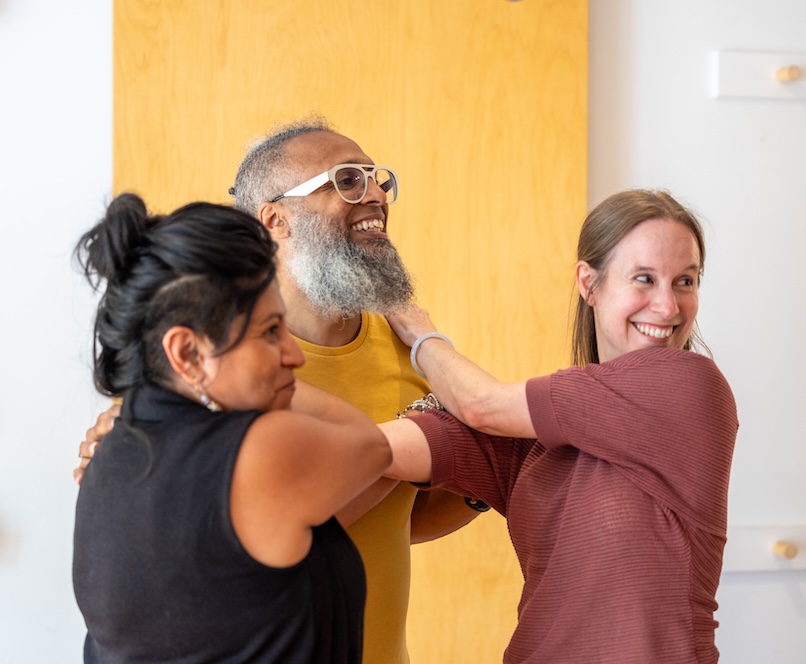
Photo: Mitzy, Micah and Hélène, GWI facilitators. Photo by