
February 3rd was my one year anniversary at the Good Work Institute as the Fiscal Sponsorship Manager-turned-Steward.
I had some idea about fiscal sponsorship from my time in philanthropy. I knew it was a way for donors to resource folks doing good work without bogging them down with the administrative and operational burden of setting up their own 501(c)(3).
But what did it mean to be a fiscal sponsor?
Starting as Fiscal Sponsorship Manager at GWI meant my first-ever local commute. Up I-87 from Newburgh to Kingston a few times a week. The perfect length of time to listen to a full album. Two of my 2025 favorites were “The Boy Who Played The Harp” by the British rapper Dave and “Love Letters” by Saint Levant, a Palestinian singer.
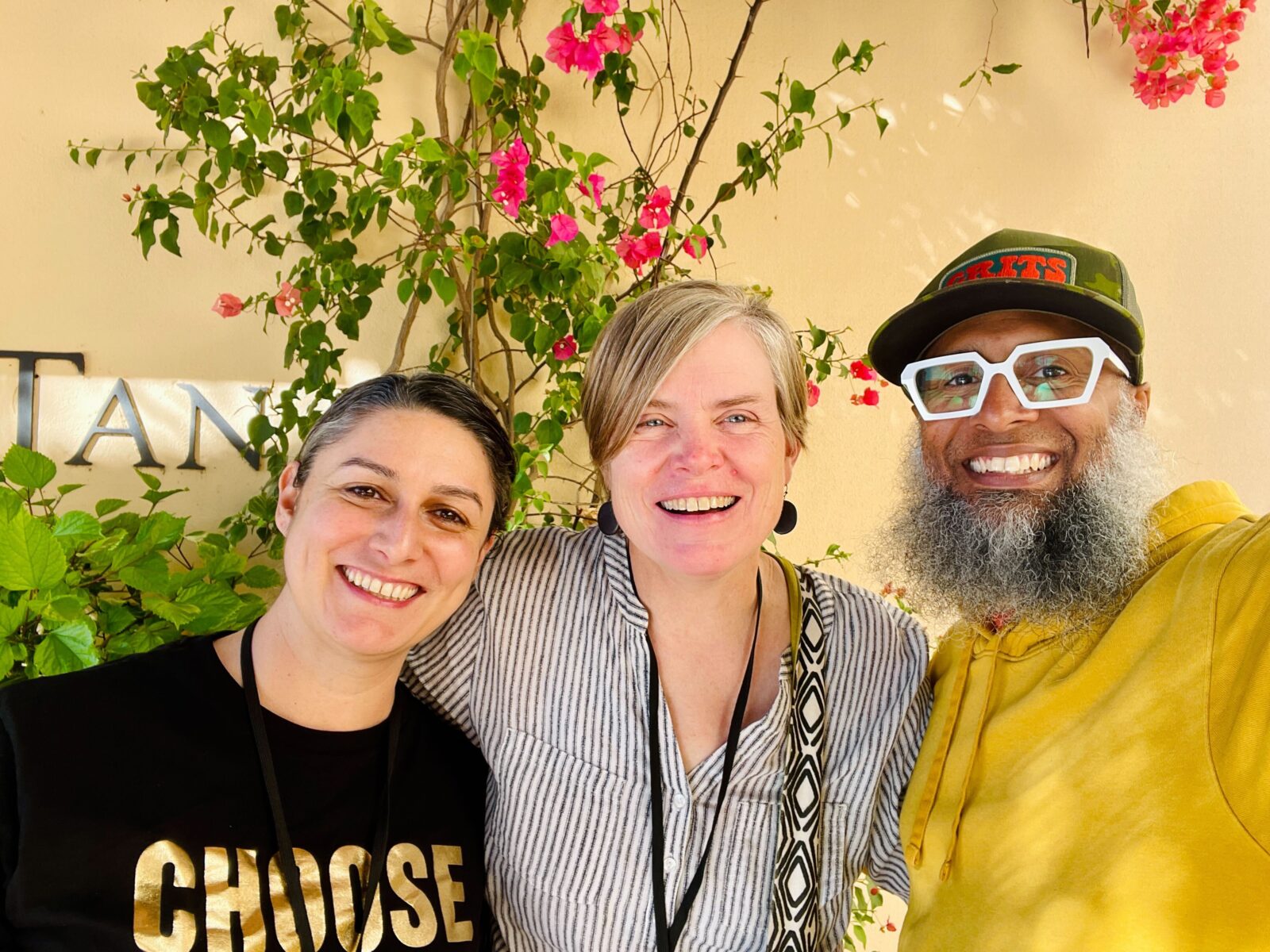
At GWI, our fiscal sponsorship work is stewarded by our unsurprisingly named Fiscal Sponsorship Circle. It’s me, Susan and Micah. (Aren’t we cute?)
I am the one worker who spends all my time on fiscal sponsorship. The dedicated Fiscal Sponsorship Steward is a new role in the organization and represents an intentional increase in capacity and attention to this part of GWI’s programming.
As one of the workers who joined the circle towards the beginning of GWI’s fiscal sponsorship program, Micah is our elder. He brings this wisdom to tend to and guide prospective projects through our intake and application process. Susan provides the ops and accounting savvy and the all-important signatory authority. Between us, we spend a lot of time with spreadsheets, templates and numbers, as this poem we love expresses:
We are fiscal sponsors,
the backstage crew of change,
where paperwork and purpose
share the last name.
We are the guardians of the grant reports,
the keepers of compliance,
the quiet champions
of someone else’s brilliance.
We see spreadsheets as love letters,
each cell a small act of care,
because when you manage money with mission,
you’re saying: your work belongs here.
– Excerpts from “The Quiet Champions” by Ema Sol of Future Incubator
We sign grant letters, comb over financials, and make grants. We obsess over workflows, filing systems, and user experience. How do we make this easier for our projects? How do we make this easier for us? How do we balance creative problem solving with the overarching goal of maintaining compliance? And the ultimate question: Is this work IRS-defined charitable?
Working with our sponsored projects can feel like time travelling. One of my favorite reads of last year was “Everything for Everyone: An Oral History of the New York Commune, 2052-2072”. It is a work of speculative fiction that captures the stories of activists, farmers, DJs, sex workers and others who’ve survived the capitalist collapse and forged a new social order. It is full of insights on how we can move through these times and what we need to thrive.
I see the seeds and sprouts of this new world in the work of our projects. Not just in their missions, but in how they organize themselves to prioritize cooperative governance and caring, resilient relationships. It is the opposite of the profound and painful change that many in the nonprofit and philanthropic sectors are experiencing. Extreme external pressures, yes, but also the ex/implosion caused by years of unresolved power dynamics, crises in leadership, and organizational trauma.
I am deeply thankful to support work that is happening right where we live. I am grateful to learn from our projects and to be a small part of this collective change, one spreadsheet at a time.
Learn more about our fiscal sponsorship program in the companion blog post: A Thriving Program in a Challenging Context: GWI Fiscal Sponsorship in 2025.