
At GWI, fiscal sponsorship is part of our mission to Democratize Communities, Wealth, and Work. We get to partner with passionate leaders, organizers, and change agents in the region. We support a variety of charitable projects that respond to many of our most pressing issues, including :
- food security, including work by BIPOC and LGBTQIA+ farmers
- immigrant protection
- housing and land access, including cooperative structures
- ways of being in community that are regenerative, just, and life affirming, like gift circles and innovative modes of exchange
- education, including initiatives in music, the arts, workforce development, reproductive healthcare, farming, and the environment
A fiscal sponsor is a 501(c)(3) tax-exempt organization – like GWI – that provides services to mission-aligned projects and organizations. To ensure legal compliance, we enter into contractual agreements with individuals and entities (LLCs, S-Corps, state non-profits) doing charitable work. Through this relationship, we can extend certain benefits of being a 501(c)(3) to the sponsored entity, giving them the freedom to focus on their work.
One key benefit is that we are able to accept tax-deductible donations for our affiliated projects from individuals and companies, as well as grants from foundations and donor-advised funds that can only give grants to 501(c)(3)s. These are funding sources that these projects would not otherwise be able to access. In exchange, projects agree to a minimal 5% administrative charge on the funds they raise and to report on their use of funds, ensuring they’re used for charitable purposes.
As institutions and systems collapse and are deliberately attacked and dismantled, fiscal sponsorship enables new ideas to take root quickly. It allows for community-led projects to respond to urgent needs and to build alternatives for the long haul. It channels resources to communities that have historically been denied access to capital and power.
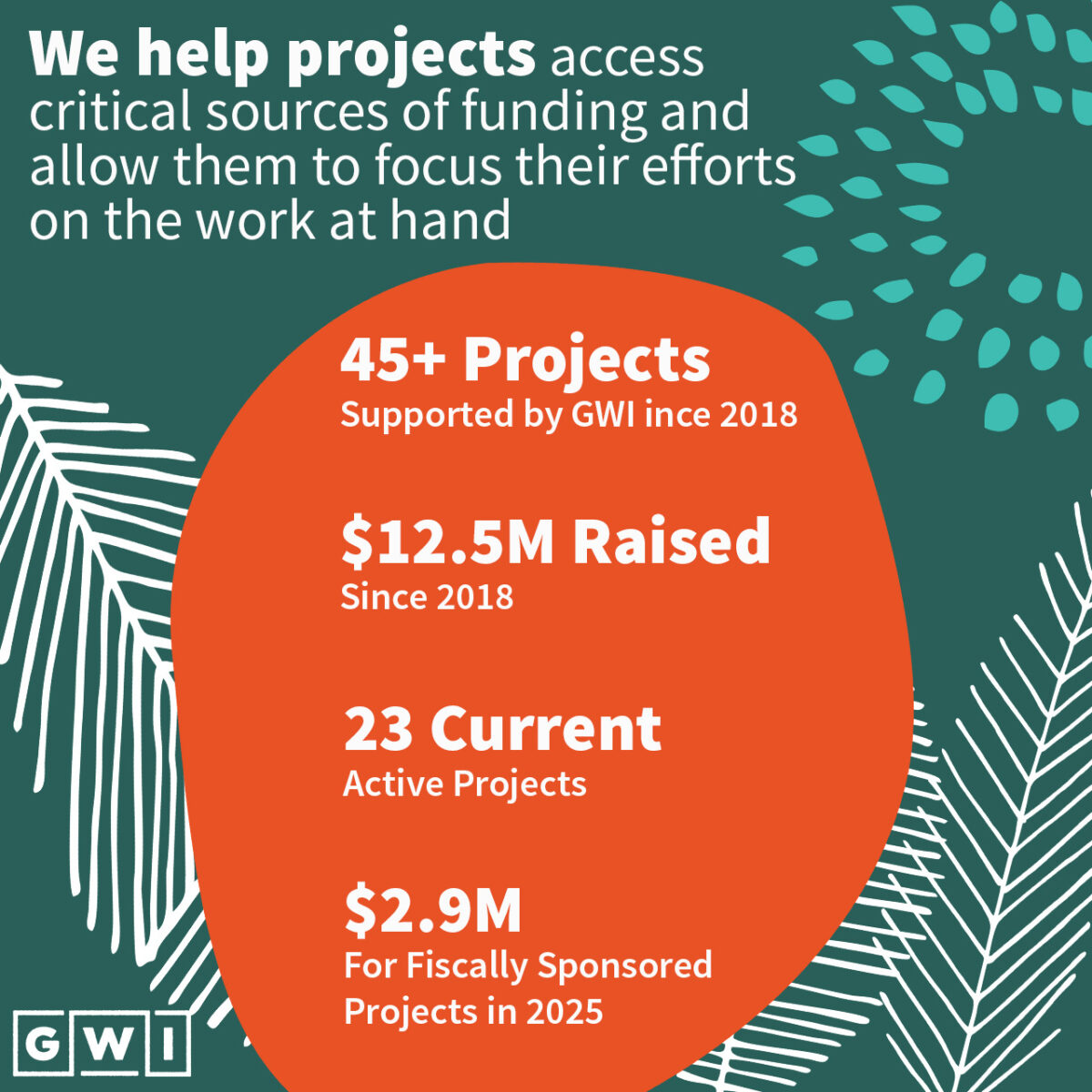
Through its fiscal sponsorship program, GWI supports good work in the Hudson Valley by accepting and regranting funds to charitable projects working towards a Just Transition. Since the start of our program in 2018, we have helped over 45 fiscally-sponsored projects access more than $12 million in charitable funds.
2025 was a year of program growth:
- We received 44 inquiries about fiscal sponsorship. Demand for fiscal sponsorship is high and our pipeline is busy.
- We grew to 23 active projects and counting. The number of projects that we fiscally sponsor doubled in the last year. We signed with 10 new projects and four more are waiting in the wings.
- We received over $2.9 million in funding on behalf of local projects and disbursed just over $1.8 million. Donations are held in a restricted fund until projects request funds for their charitable activities.
It was also a year of levelling up. We worked on a lot of process, template, and policy tweaks over the course of 2025. We liaised with our lawyers to update our fiscal sponsorship agreement and to introduce amendments for when projects change their entities or need to update their scope of work. We grappled with complex questions around charitability and revenue, assets, and intellectual property.
Our focus on compliance and the integrity of our process and systems is all-the-more important because the nonprofit sector is under attack. The administration’s tactics include stripping 501(c)(3)s of their federal funding, investigating and intimidating them, and threatening their charitable status. In the past year the administration has asked the IRS to investigate and revoke the tax-exempt status of prominent fiscal sponsors who support issues that don’t align with the administration’s agenda.
As our Circle was growing and strengthening, we were not immune to the chaos swirling around us. The suspension of funding, jobs and protective programs across the federal government. The trampling of commitments to social equity, racial justice, free speech, and environmental repair. Escalating attacks on immigrants and LGBTQIA+ folx. Clamp downs on essential rights and those who dare to fight for them.
What would this latest executive order or new directive mean for us and our projects? What should we be attentive to and what is a distraction?
Our resulting discussions have focused on the line between protecting our projects and not obeying in advance or acting out of fear. Our commitment to supporting good work has not changed, nor have we changed how we describe our work.
As we move in 2026, we are investing time and resources in upping our digital security. This includes extending training to our projects so that they can protect themselves and their communities from communications and tech-related risks. We are revisiting our tech-stack to see where we can gain efficiencies without sacrificing financial protection. We are working on new resources and guidance for our projects and providing collective learning opportunities.
Much remains uncertain about the funding, legal, and operating environment that we are in. It is important to us that our offering remains relational and deeply rooted in the Mahicantuck/Hudson Valley. We want to ensure we cater to existing projects’ needs without shutting the door to important, emergent work.
We welcome your contribution in support of GWI’s work in these challenging times. Your operational support to GWI will support our planned work in 2026 and, by extension, the stability and capacity of the projects we support throughout the Mahicantuck/Hudson Valley.
You can read more about what fiscal sponsorship means to us at GWI in the companion blog post: Fiscal Sponsorship at GWI: What Spreadsheets Have to Do with Building New Worlds.