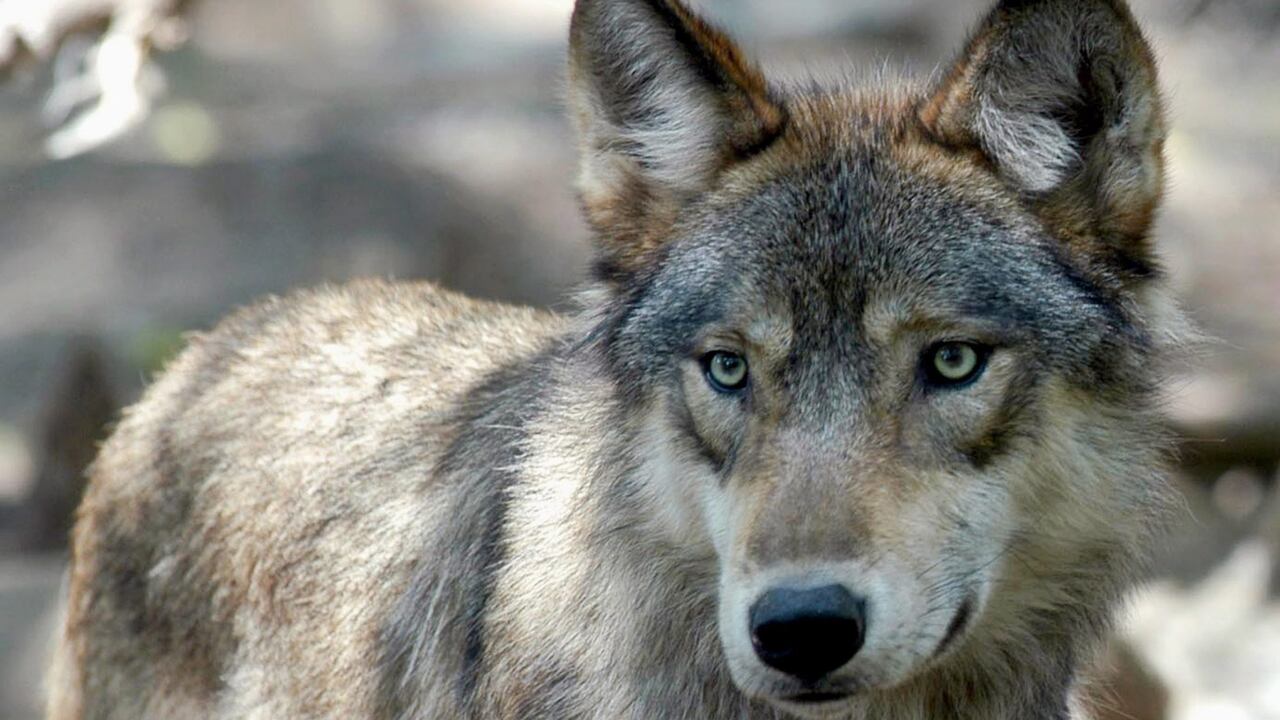

I saw wolves hunting caribou. They all used the same paths, snow packed down by all the hooves, walls of snow on either side, hemmed in. The wolves hunted as a pack, and fanned out. As the caribou rushed to escape and protect the vulnerable, the wolves had to choose which snow paths to follow, their heads low, their senses focused, concentrating. The paths branched and branched again. The lead wolf powered uphill, unrelenting, but made a wrong turn. They had to abandon the hunt.
I read a novel recently about a woman obsessed with wolves, a researcher who was willing to tolerate living in the snow to glimpse them through binoculars. She knew each wolf’s personality intimately, and so I got to know them too. She was trying to protect them from farmers who would rather kill them on sight. The reintroduction of predators in the highlands of Scotland was not going well.
In my mind’s eye, the wolf’s gaze is steady and penetrating. The wolf moves effortlessly, like water. She is determined, loyal, efficient, and intent on finding her next meal. As a group, the pack is organized, hierarchical, caring, and provides a safe haven for young wolves to play like puppies and learn how to hunt. I admire them.
Humans, like wolves, have eyes set close together, looking forward. This provides the advantage, evolutionarily, of predator eyes which means we have excellent depth perception but limited peripheral vision. Prey animals generally have eyes to the sides of their head. This provides the advantage of being able to see a panoramic view of the world, to detect predators from almost any direction while they are out and about, feeding. While we certainly evolved to avoid getting eaten, we spent more time figuring out how to hunt in packs.
One of my favorite songs is Björk’s The Hunter. I was born in the year of the Tiger. I am Sagitarrius. That’s a lot of hunter energy. But my thoughts have been dominated lately by the idea of peripheral vision.
I observe, through my hunter eyes, that I am yearning to spend more time widening my gaze. Lately, our tunnel vision has been bombarded by stories and crises and outrage. It takes its toll. Maybe it was when I heard Ezra Klein in conversation with Yuval Levin a couple of weeks ago that I started to wonder. They were saying that this president has not accomplished much at all, if you look at the actual record in this first year. We get the impression that we are having things hurled at us constantly, it feels like that. But they were positing that if we zoom out and look at the durable changes, we are not seeing the same level of systemic damage that we might imagine. That started me thinking about the advantages of the wide angle lens.
What if we cultivated our peripheral vision? We are not made for it. Our culture celebrates its opposite – short term gain, hyper-focus, plowing ahead, deep expertise rather than breadth of knowledge, an economy based on vying for our limited attention, the list goes on. But what if the way through, the way towards the type of vision we need in this time, is actually the ability to hold many things in our minds’ eye at once, some of them obviously related, some not. Imagine if we opened our view to be able to take in a wider vista, one that could encompass extra factors we can’t account for yet, the subtler currents we can only notice by slowing down.
Shinrin yoku, the Japanese practice of forest bathing, is described as a therapeutic practice of strolling through the woods, opening all senses to the sounds, smells, sights, and experiences of the life around the walker. It lowers blood pressure and stress. It offers a break from the constant visual processing we are doing, through our screens, ingesting and quickly jettisoning small bits of information and entertainment. I imagine that when she is not hunting, my wolf can also walk silently, unhurried, through the forest, refreshing herself, letting her eyes wander.
How can we strengthen our ability to soften our gaze, open our aperture, and take in the whole, not just the most dazzling or enraging small parts? In times of darkness, and when it is safe, how can we tamp down our fires so we can breathe deeply and see a sky still full of stars? We will need a longer view to get us through. That takes conscious practice. Letting all of our senses take in our full environment, so we can not shy away from complexity, not demand understanding right away, but rather be cultivating a deeper listening, together.